
Stories
Welcome to Crown of Weeds!

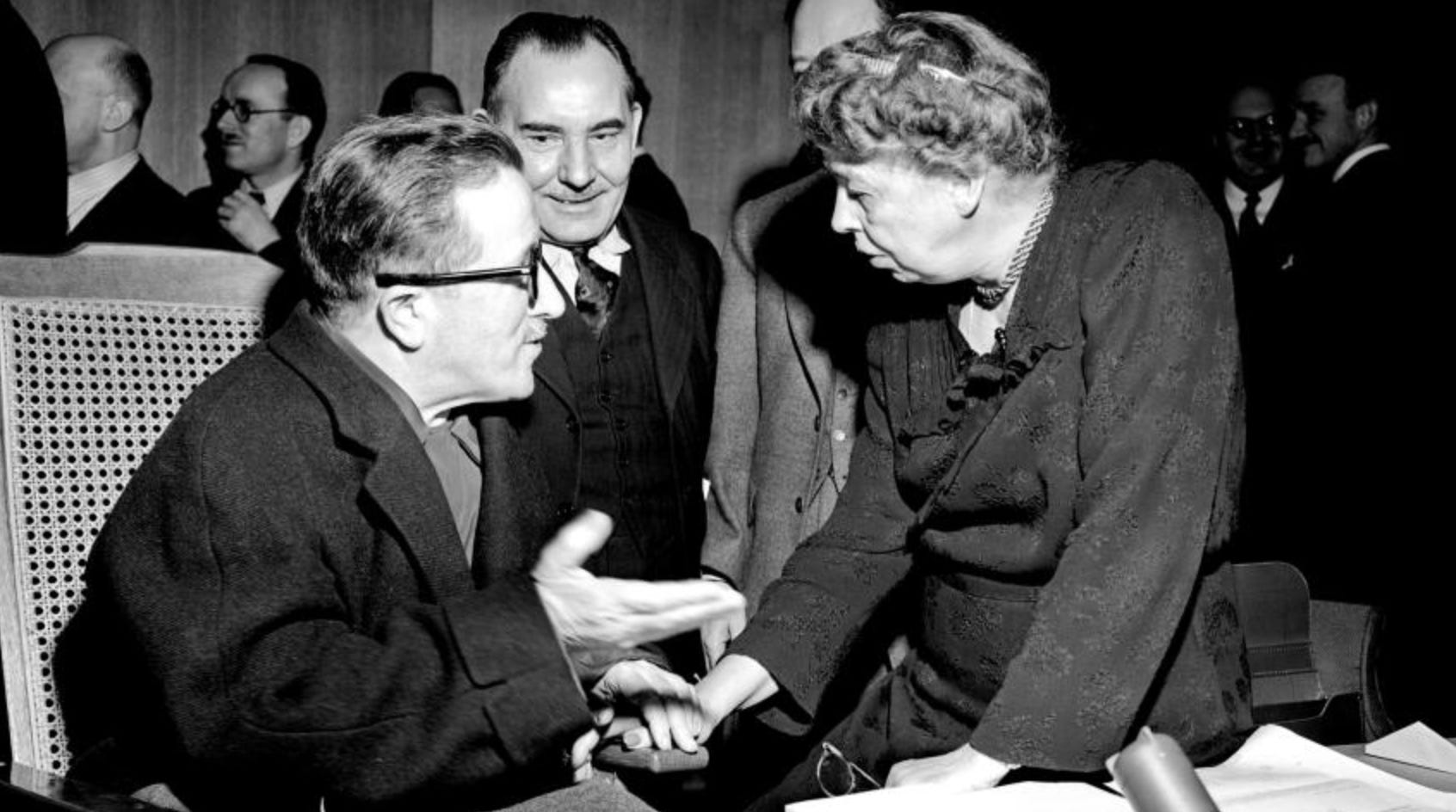
In 1947, Eleanor Roosevelt Chaired the UN Commission on Human Rights, which was charged with defining the rights of which every single person is possessed by their inherent human dignity. This was the first time in human history that the world sat down and worked together to agree upon these rights. The result was The Universal Declaration of Human Rights.
The establishment of universal human rights is meant to serve as a north star by which we, the world community, can arrange our civic lives. The variety of our societies can be infinite, but the rights of which every human is possessed must be inviolable.
Join us here on Crown of Weeds for different lenses on our progress and failures to ensure that everyone in the world community is afforded these rights. Join us here to see how the pursuit of universal human rights is fundamentally interwoven in the pursuit of truth, understanding, happiness, beauty, and justice.
I'm not sure what I think about the following, but it challeges me, as soon as the conversation moves beyond emergent questions of survival.
“Inspired by the question from France, [‘Human rights is a concept that originated in France. Do you think it is universal?’ ] Ueno and other Japanese scholars continued their discussion in scholarly journals and popular magazines in Japan. In one essay, she wrote that ‘it is a naïve Enlightenment perspective to see the contemporary history of human rights as a process of expanding the rights already enjoyed by the privileged to others across class, gender, and race.’ In other words, to consider human rights standards as akin to ISO standards – created by experts, waiting to be “diffused mechanically” – is exactly the wrong approach. The point of human rights struggles is not about bringing everyone to the status of the oppressor.
…
"The future of the rights regime will not be in its own legal universe, but one that depends on finding its relevance in other conversations."
- LuHan Gabel, Is it all about power? A response to “Human Rights on the Edge”, from The Ideas Letter, https://www.theideasletter.org/essay/is-it-all-about-power/
And this too:
"I think a majority of us, at one time or another, live as exiles within our own categories. … Fred Moten’s writings … [do] not discard identity; it challenges its fixity, placing it within and across histories. It affirms that one may inhabit a position without being defined by it and that our affiliations can be both unfinished and real. …
"The world today is not post-identity. It is post-coherence. The old subjects have frayed: the individual, the citizen, even the people. What remains are entanglements. Half-named wounds. Provisional alliances. The desire for clarity has not vanished, but its forms no longer hold.
We do not need another universal; we need a way of living together that does not require sameness. This is a humanism not of shared essence, but of shared difficulty."
- Tessy Schlosser Why Identity is Failing – and Can’t be Abandoned https://www.theideasletter.org/essay/why-identity-is-failing-and-cant-be-abandoned/